Locations
Tetbury
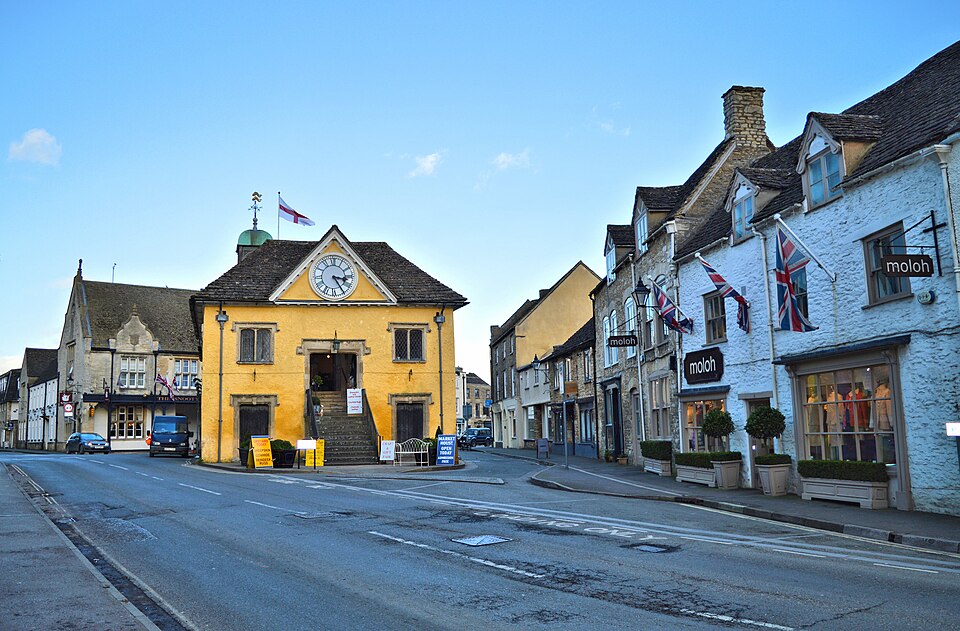
Tetbury, a small town in Gloucestershire's Cotswold District with a population of around 5,500, is a market town. It is nestled in the rolling limestone hills of the English countryside and close to the River Avon. The town has all the characteristics of a classic Cotswold village, including honey-coloured stone houses, a charming market, and an air of calm, well-preserved history.
The origins of the town are ancient. There is evidence of Saxon settlements and a medieval wealth rooted in the wool trade. Tetbury used to be a major centre for wool traders, and wealth from that time left an architectural legacy. The Market House is one of the Cotswolds' most photographed buildings. It was built in 1655 on stone pillars. Tetbury's royal connections are perhaps the best-known feature of its history. Highgrove House is the private residence of King Charles III, and it's located just outside of the town. The King's long association with the area has attracted considerable attention to Tetbury. This proximity brings visitors to the town, who can explore the antique shops, boutiques, and galleries. Tetbury is known as one of the premier antiques destinations of England's West.
Woolsack races are held annually on Gumstool Hill during the May Bank Holiday. They are a local tradition that harks back to the wool trading past of the town, and attracts spectators and competitors from all over the region.
Cirencester
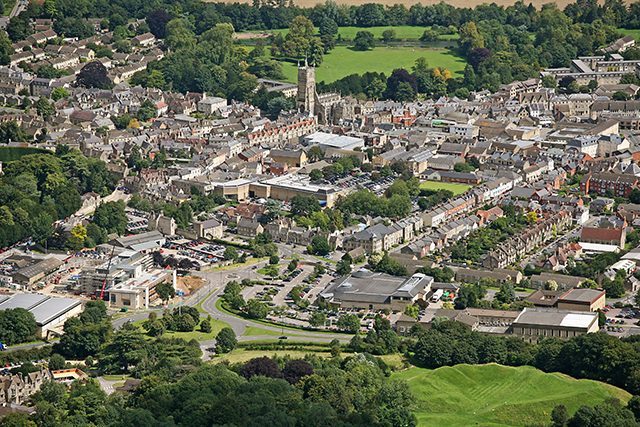
Cirencester, the largest settlement in the Cotswolds, is also one of England's most historic towns. It was located in Gloucestershire, at the intersection of several Roman roads, including Ermin Street, the Fosse Way, and the Fosse Way. In Roman times, the town was called Corinium Dobunnorum, and it served as the second-largest city in Roman Britain, after Londinium. This extraordinary heritage can be seen throughout the town. From the size of its earthwork remnants to the world-class collection housed at the Corinium Museum, which contains some of the best Roman mosaics and other artefacts in the country. Cirencester, with a population of around 20,000 people, is a vibrant market town that serves as a regional hub for villages and rural communities in the Cotswolds. The twice-weekly market is a continuation of a tradition that dates back to medieval times, when the town was wealthy from the wool trade.
The centre of the town retains much of its historical character. It is dominated by the Church of St John the Baptist. This wool church, which is one of the largest in England, has a tower that rises majestically above the market. The streets of the town are lined with Georgian architecture and older buildings, lending it a sense of coherence and beauty that rewards a leisurely exploration.
Cirencester also hosts the Royal Agricultural University (the oldest agricultural college of the English-speaking countries), which has reinforced the town’s strong ties with rural land management. Cirencester Park is the sprawling estate of the Bathurst Family, which adjoins the centre. Its extensive woodland and parkland walking trails are open to both residents and visitors.